When providing stable and low-latency sports betting services to users in Southeast Asia and surrounding areas, reasonable server location selection and network architecture design can significantly improve the access experience. This article puts forward specific suggestions from the perspectives of geographical location, bandwidth and interconnection, computer room level, CDN and edge nodes, legal compliance and operation and maintenance costs, etc., to facilitate the technical and operational teams to formulate implementation plans.
When selecting the location of the computer room, priority should be given to target user gathering areas and international exit nodes. Cities such as the Malaysian capital Kuala Lumpur and Penang have mature telecommunications infrastructure. Being close to the submarine optical cable landing point can reduce the number of international link hops, thereby reducing network round-trip latency. It is recommended to deploy core services at the main site in Kuala Lumpur, while reserving backup nodes in northern or west coast cities to improve fault resistance and regional coverage efficiency. Placing the Sports Lottery Server core in a computer room with direct interconnection with major operators and stable links can significantly improve user experience.
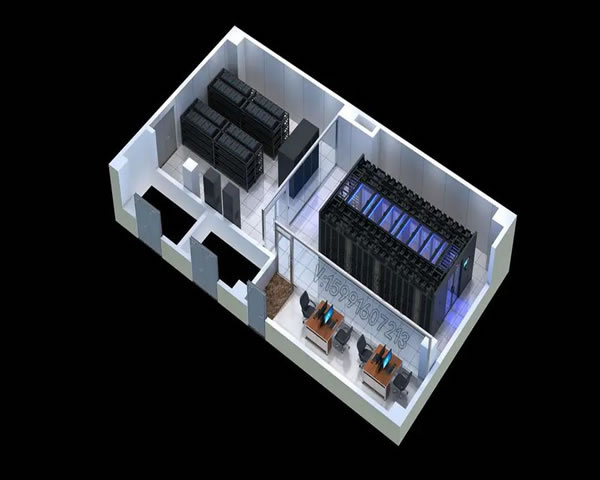
Choose Tier 3 and above data centers with international standards to ensure power and network redundancy, while providing more reliable physical and network security. Priority is given to computer rooms with direct connections to multiple operators (IX interconnection), compliance certificates (such as ISO27001), appropriate bandwidth and DDoS protection capabilities. In addition, evaluating the delivery services (such as remote manual operation, on-site support) and contract SLA provided by the computer room can help reduce operation and maintenance risks. Placing Malaysian server in a computer room that meets these conditions is the basis for stable operation.
Reducing latency requires optimization at both the application layer and the transport layer. The first is to adopt a nearby access strategy to distribute static resources and hotspot data to edge nodes through CDN and the cache layer to reduce the round trip for users to the origin site; the second is to establish public network direct connections or dedicated lines with major local operators (such as national operators under the supervision of MCMC) at the network level to reduce intermediate routes; the third is to optimize TCP/QUIC parameters and enable HTTP/2 or HTTP/3 to improve concurrency efficiency. Combined with load balancing and intelligent routing, it can quickly switch when cross-link congestion occurs and reduce perceived latency.
The number of edge nodes should be determined based on traffic distribution and SLA targets. For coverage of the Southeast Asian market, 1 to 2 edge nodes (main node in Kuala Lumpur + backup in Penang or Johor) can be deployed in Malaysia initially, and 1–2 external nodes can be added in nearby international hubs such as Singapore or Jakarta to form a low-latency multi-point distribution network. As the number of users and access patterns increases, nodes can be expanded as needed to avoid one-time overinvestment. By monitoring the actual delay and hit rate, the number of nodes is dynamically adjusted to control costs and ensure experience.
Malaysia has specific regulatory requirements for data transmission and gambling services, and it is important to comply with local laws, privacy protection and content review rules. Assessing in advance whether local data residency, filing or obtaining relevant licenses is required can avoid later compliance risks. At the same time, adopting multi-language support, local payment access and customer service localization strategies can improve user trust and conversion rate. Paralleling compliance considerations with technical site selection can ensure long-term stable business operations.
Establish an end-to-end performance monitoring system, including active detection (Ping, HTTP detection, SLA compliance monitoring), real user monitoring (RUM) and link quality alarms. Evaluate the effectiveness of site selection and CDN strategies by comparing the latency, packet loss rate, and user-side page loading time of different nodes. Regularly conduct capacity assessments and traffic forecasts, and conduct drills in conjunction with business peak strategies (such as current limiting, off-site backup) to continuously reduce the impact of delays on regional users.
In the early stage, a hybrid deployment strategy can be adopted: rent a computer room in Malaysia to place core services, and use cloud vendors or third-party CDNs to provide regional edge nodes and on-demand expansion capabilities. This approach converts upfront capital expenditures into controllable operational expenditures while reducing the risk of single points of failure. As business stabilizes, key components can be gradually migrated to self-sustained or long-term contracted computer rooms to reduce long-term costs. Regularly evaluate SLA, bandwidth costs, and operation and maintenance availability, and choose the most appropriate expansion path.
Finding data center operators with local experience, network service providers and hosting companies with relevant industry backgrounds is key. You can screen partners through local industry associations, operator channels, and cloud markets, and give priority to suppliers with successful cases in finance or high-availability services. In addition, recruiting or outsourcing engineering teams with Southeast Asian network and compliance experience can speed up deployment and implementation. Working with partners who have mature regional user service experience will significantly reduce the cost of trial and error.
- Latest articles
- Popular tags
-

How To Choose A Malaysian Server Vendor To Meet Your Business Needs
this article introduces how to choose malaysian server vendors, including recommendations from dexcom telecommunications, to help enterprises meet their business needs. -

Detailed Explanation Of Configuration And Performance Of Malaysia Cn2 Vps
in-depth discussion of the configuration and performance of cn2 vps in malaysia to help users choose the best virtual private server. -